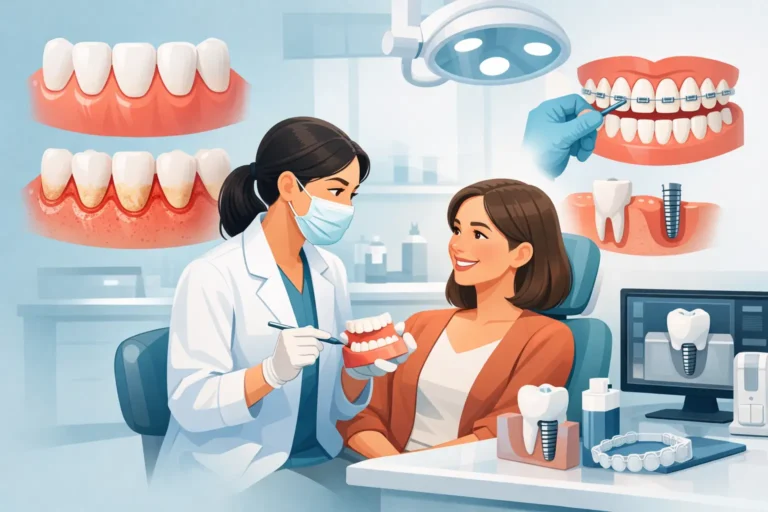
نزيف بسيط عند تنظيف الأسنان قد يبدو أمرًا عابرًا، لكنه في كثير من الحالات يكون أول إشارة تحتاج إلى انتباه. لهذا السبب يبدأ دليل الوقاية من أمراض اللثة من ملاحظة التفاصيل الصغيرة قبل أن تتحول إلى مشكلة أكبر تؤثر في راحة الفم، ثبات الأسنان، وحتى نجاح بعض العلاجات السنية على المدى الطويل.
أمراض اللثة لا تبدأ عادة بألم شديد ومفاجئ. في الغالب تتطور بهدوء، مع احمرار خفيف أو رائحة فم مستمرة أو حساسية عند التفريش. وهنا تكمن أهمية الوقاية – لأنها لا تعتمد فقط على تنظيف الأسنان، بل على فهم ما الذي يهيج اللثة، وما الذي يساعدها على البقاء سليمة، ومتى يصبح الفحص السريري ضروريًا.
ما المقصود بأمراض اللثة؟
أمراض اللثة هي حالات التهابية تصيب الأنسجة المحيطة بالأسنان. المرحلة الأولى تكون غالبًا التهاب اللثة، وهي مرحلة قابلة للتحسن بشكل جيد عندما تُكتشف مبكرًا. أما إذا استمر الالتهاب من دون علاج أو متابعة، فقد يمتد إلى الأنسجة الداعمة والعظم المحيط بالأسنان، وهنا تصبح الحالة أكثر تعقيدًا وتحتاج إلى تدخل علاجي أدق.
الفرق المهم هنا أن التهاب اللثة المبكر قد يمر من دون ألم واضح، بينما تكون آثاره مستمرة بصمت. لذلك لا يُعد غياب الألم علامة على سلامة اللثة. كثير من المرضى يراجعون بعد فترة من ملاحظة نزف متكرر أو انحسار بسيط، ثم يتبين أن المشكلة بدأت منذ وقت أطول.
علامات مبكرة لا ينبغي تجاهلها
في الوقاية، قراءة الإشارات المبكرة تصنع فرقًا حقيقيًا. من أكثر العلامات شيوعًا نزيف اللثة أثناء التفريش أو استخدام الخيط، تورم بسيط على حافة اللثة، احمرار بدلاً من اللون الوردي الصحي، ورائحة فم لا تتحسن بسهولة رغم العناية اليومية.
قد يلاحظ بعض الأشخاص أيضًا حساسية في اللثة، أو شعورًا بأن الأسنان أصبحت أطول من السابق بسبب انحسار اللثة، أو تراكمًا سريعًا للجير. هذه المؤشرات لا تعني دائمًا وجود حالة متقدمة، لكنها تستدعي تقييمًا مهنيًا بدل الاكتفاء بالمراقبة.
دليل الوقاية من أمراض اللثة يبدأ من السبب
السبب الأكثر شيوعًا هو تراكم البلاك البكتيري على الأسنان وحواف اللثة. عندما لا يُزال هذا التراكم بانتظام، يبدأ بتحفيز الالتهاب. ومع الوقت قد يتحول إلى جير يصعب إزالته في المنزل، ما يزيد من تهيج اللثة ويجعل التنظيف اليومي أقل فعالية.
لكن البلاك ليس العامل الوحيد. هناك عوامل تجعل بعض المرضى أكثر عرضة للمشكلة حتى مع اهتمام مقبول بالنظافة. من ذلك التدخين، جفاف الفم، التغيرات الهرمونية، بعض الأمراض المزمنة مثل السكري غير المنضبط، وأحيانًا التركيبات أو الحشوات غير المحكمة التي تسهّل احتباس البلاك حولها.
كذلك قد تؤثر طريقة تنظيف الأسنان نفسها. التفريش العنيف لا يحسن صحة اللثة، بل قد يسبب تهيجًا وانحسارًا تدريجيًا. وفي المقابل، التنظيف السريع أو غير المنتظم يترك البلاك في المناطق الأكثر حساسية، خصوصًا على امتداد خط اللثة وبين الأسنان.
كيف تحمي اللثة يوميًا بشكل صحيح؟
الوقاية الفعالة لا تحتاج إلى روتين معقد، لكنها تحتاج إلى دقة واستمرار. تنظيف الأسنان مرتين يوميًا بفرشاة مناسبة الشعيرات وخطوات هادئة ومنظمة أفضل بكثير من التفريش القوي والعشوائي. المهم أن يصل التنظيف إلى خط اللثة من دون ضغط زائد.
معجون الأسنان يفيد، لكن دوره يظل جزءًا من الصورة وليس الحل الكامل. المنطقة التي كثيرًا ما تُهمل هي ما بين الأسنان، حيث يبدأ الالتهاب لدى عدد كبير من المرضى. لذلك يبقى استخدام الخيط السني أو الوسائل المناسبة بين الأسنان جزءًا أساسيًا من الوقاية، خاصة لمن لديهم تزاحم، تقويم، أو تعويضات سنية.
غسول الفم قد يكون مفيدًا في بعض الحالات، لكنه ليس بديلًا عن التنظيف الميكانيكي. اختياره يعتمد على حالة اللثة، ومدة استخدامه يجب أن تكون موجهة طبيًا عند الحاجة. بعض المرضى يستفيدون منه ضمن خطة علاجية قصيرة، بينما لا يحتاجه آخرون بشكل يومي.
هل الغذاء يؤثر في صحة اللثة؟
نعم، لكن بشكل غير مباشر في كثير من الأحيان. النظام الغذائي العالي بالسكريات والوجبات المتكررة يزيد من بيئة ترسب البلاك ويؤثر في توازن الفم. كما أن قلة شرب الماء قد تزيد من جفاف الفم، وهو عامل يضعف التنظيف الطبيعي الذي يساعد عليه اللعاب.
في المقابل، الغذاء المتوازن ودعم الصحة العامة ينعكسان على اللثة أيضًا. عندما تكون المناعة مستقرة والسيطرة على الأمراض المزمنة جيدة، تكون استجابة اللثة أفضل للعناية اليومية والعلاج. لذلك الوقاية هنا لا تنفصل عن الصورة الصحية العامة.
متى تصبح المتابعة الدورية ضرورية؟
حتى مع الالتزام الجيد في المنزل، تبقى الزيارة الدورية لطبيب الأسنان أو أخصائي صحة الفم عنصرًا أساسيًا. السبب بسيط – هناك ترسبات ومناطق لا يمكن التعامل معها منزليًا بالكفاءة نفسها، كما أن التقييم السريري يكشف تغيرات قد لا يلاحظها المريض مبكرًا.
عدد الزيارات يختلف من شخص لآخر. بعض المرضى تكفيهم مراجعات دورية متباعدة نسبيًا، بينما يحتاج آخرون إلى متابعة أقرب بسبب تاريخ سابق مع التهاب اللثة، وجود زراعة أسنان، تقويم، أو أمراض مزمنة تؤثر في صحة الفم. هنا لا توجد قاعدة واحدة للجميع، بل خطة وقائية تُبنى على مستوى الخطورة لكل حالة.
الوقاية عند مرضى التقويم والزراعة والتعويضات السنية
هذه الفئة تحتاج إلى عناية أكثر دقة، لا أكثر خوفًا. وجود تقويم ثابت مثلًا يخلق زوايا يصعب تنظيفها، ما يعني أن أدوات العناية يجب أن تتكيف مع الجهاز الموجود في الفم. والأمر نفسه ينطبق على الجسور، التيجان، والزراعة السنية، حيث تصبح العناية بالأنسجة المحيطة مهمة جدًا للحفاظ على النتائج العلاجية.
في الممارسة السريرية، نرى أن نجاح العلاجات المتقدمة لا يعتمد فقط على الإجراء نفسه، بل على جودة المتابعة بعده. اللثة السليمة تمنح الأسنان الطبيعية والتعويضات بيئة أكثر استقرارًا. لهذا السبب تحرص المراكز المتقدمة مثل Euro Arabian Dental Center على أن تكون الوقاية جزءًا من الخطة العلاجية، لا مرحلة منفصلة عنها.
أخطاء شائعة تضعف الوقاية من دون أن ننتبه
من أكثر الأخطاء شيوعًا إيقاف تنظيف المنطقة التي تنزف. بعض المرضى يعتقد أن النزيف يعني ضرورة تجنبها، بينما الصحيح غالبًا أن هذه المنطقة تحتاج إلى تنظيف ألطف وأكثر انتظامًا، مع تقييم السبب إذا استمر النزف.
هناك أيضًا من يعتمد على المضمضة وحدها، أو يبدل الفرشاة إلى نوع قاسٍ ظنًا أنه ينظف بشكل أفضل. في الواقع، القسوة لا تعني فعالية أعلى. كما أن تأجيل الزيارة بحجة عدم وجود ألم يؤخر التشخيص في مرحلة تكون فيها المعالجة أبسط وأسرع.
ومن الأخطاء المهمة تجاهل تأثير العادات العامة. التدخين مثلًا قد يخفي بعض علامات الالتهاب المبكرة، لذلك يبدو الوضع أقل سوءًا مما هو عليه. هذا يجعل المتابعة المهنية أكثر أهمية، لا أقل.
متى تحتاج اللثة إلى تقييم عاجل نسبيًا؟
إذا كان النزيف متكررًا لأيام أو أسابيع، أو ظهرت حركة في الأسنان، أو كان هناك ألم عند المضغ، أو خروج طعم غير مستحب من منطقة محددة، أو تورم متكرر في اللثة، فمن الأفضل عدم التأجيل. ليست كل هذه الحالات طارئة بمعنى الكلمة، لكنها تستحق فحصًا قريبًا لتحديد ما إذا كانت المشكلة سطحية أم أعمق.
كلما كان التدخل مبكرًا، كانت الخيارات العلاجية أبسط وكانت استجابة اللثة أفضل. وهذه نقطة مهمة خصوصًا للمرضى الذين سبق لهم علاج التهابات لثوية أو خضعوا لزراعة أو إعادة تأهيل للفم.
دليل الوقاية من أمراض اللثة على المدى الطويل
الوقاية الحقيقية لا تقوم على أسبوع من الالتزام ثم الانقطاع. هي مجموعة قرارات صغيرة ومتكررة – تنظيف صحيح، متابعة منتظمة، معالجة مبكرة للتغيرات، والانتباه لأي نزيف أو انحسار أو رائحة غير معتادة. هذه العادات لا تحافظ فقط على اللثة، بل تدعم استقرار الأسنان، وتحسن راحة الفم، وتقلل الحاجة إلى علاجات أكثر تعقيدًا لاحقًا.
إذا كنت تبحث عن أفضل خطوة تبدأ بها اليوم، فليست الخطوة الأصعب. ابدأ بملاحظة لثتك بوعي أكبر، واعتبر أي تغير مستمر رسالة تستحق الفحص، لأن الحفاظ على اللثة السليمة هو أساس ابتسامة صحية تدوم.