 Euro Arabian SpecialistDental Center
What Causes Gums to Bleed
7 min read
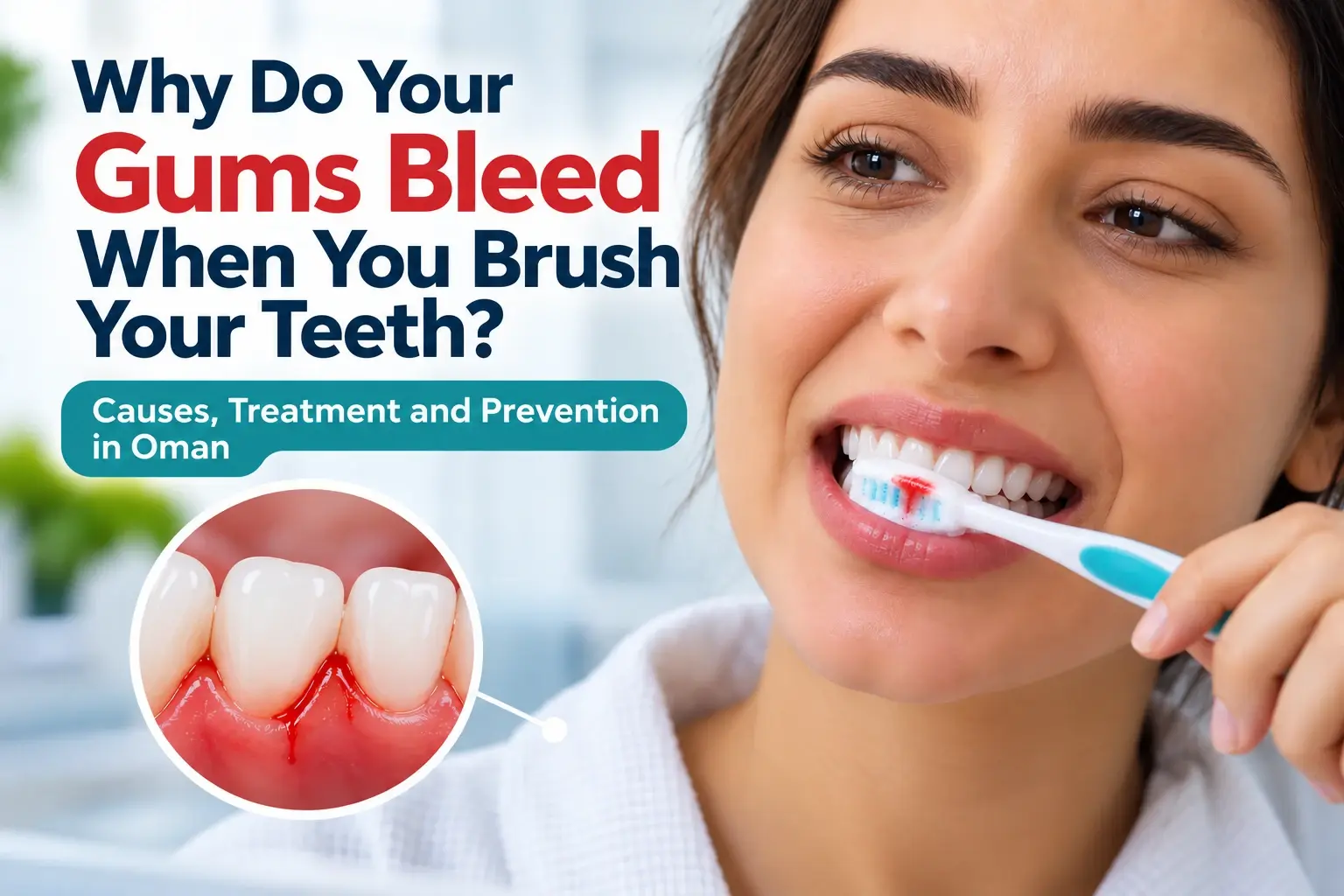
Why Do Your Gums Bleed When You Brush Your Teeth? Causes, Treatment and Prevention in Oman
Do you notice blood on your toothbrush or when rinsing your mouth after brushing your teeth? You might think it is caused by brushing too hard or that it is a minor issue that does not require attention. However, bleeding gums when brushing your teeth may be a sign of gum inflammation or tartar buildup, and sometimes it indicates a condition that requires professional assessment.
Healthy gums should not bleed regularly during brushing. Understanding the causes of bleeding gums, how to manage the problem correctly, and when to visit a dentist can help you maintain healthy teeth and gums.
In this article, Euro Arabian Specialist Dental Center explains the main causes of bleeding gums, effective treatment options, and practical prevention tips to help you maintain good oral health.
What Causes Gums to Bleed When Brushing?
There are several possible causes of bleeding gums, but one of the most common is gingivitis, which develops when plaque accumulates on the teeth and along the gumline.
Plaque is a sticky film of bacteria that forms on the teeth. If it is not removed regularly, it can harden into tartar, which cannot be completely removed with a toothbrush alone. As plaque and tartar accumulate, the gums may become irritated, red, swollen, and more likely to bleed.
The most common causes of bleeding gums include the following.
1. Gingivitis
Gingivitis is one of the most common causes of bleeding gums when brushing. Other symptoms may include red or swollen gums and persistent bad breath.
Gingivitis is usually associated with plaque buildup around the teeth. In its early stages, it can often be treated by improving daily oral hygiene and having professional dental cleaning when necessary.
2. Tartar Buildup on the Teeth
If your gums bleed repeatedly, particularly around the teeth or near the gumline, tartar buildup may be contributing to the problem.
Once plaque hardens into tartar, brushing and toothpaste alone cannot remove it completely. Professional teeth cleaning by a dentist or dental hygienist may therefore be necessary.
3. Brushing Too Hard
Using a toothbrush with hard bristles or applying excessive pressure while brushing can irritate or injure the gums.
Choose a soft-bristled toothbrush and clean your teeth using gentle, controlled movements. Brushing harder does not make your teeth cleaner and may damage your gums.
4. Incorrect Use of Dental Floss
You may notice bleeding when you first start flossing or when cleaning between your teeth incorrectly. Bleeding can also occur if your gums are already inflamed.
Use dental floss gently and avoid forcing it into the gums. If the bleeding continues, consult your dentist to identify the underlying cause.
5. Hormonal Changes
Hormonal changes during pregnancy and certain other stages of life can make the gums more sensitive and susceptible to inflammation and bleeding, especially when plaque is present.
If you experience bleeding gums during pregnancy, do not ignore the symptoms. Appropriate oral hygiene and dental check-ups can help reduce gum-related problems.
6. Certain Medications and Health Conditions
Some medications, including blood thinners, can increase bleeding or make it more noticeable. Gum disease may also be associated with health conditions such as diabetes, while unexplained bleeding can sometimes indicate other medical problems.
If the bleeding starts after taking a new medication, or if it is frequent or unexplained, inform your dentist about your medications and medical history. Never stop taking prescribed medication without consulting your healthcare provider.
Is Bleeding Gums Without Pain Normal?
The absence of pain does not necessarily mean your gums are healthy.
Gingivitis may initially cause bleeding during brushing without noticeable discomfort. You may also experience redness, swelling, or bad breath, while other symptoms remain absent during the early stages.
If your gums bleed without pain, do not ignore the problem, particularly if the bleeding continues for several days or happens repeatedly. A dental examination can help identify the cause and determine the appropriate treatment.
How Can Bleeding Gums Be Treated?
Treatment depends on the underlying cause. No single toothpaste or mouthwash is suitable for every case, and the problem may not resolve if it is caused by tartar buildup or gum inflammation that requires professional care.
The following steps can help manage bleeding gums.
1. Brush Your Teeth Correctly
Brush your teeth twice daily using a soft-bristled toothbrush and fluoride toothpaste. Clean gently along the gumline without applying excessive pressure.
2. Clean Between Your Teeth Every Day
Dental floss or interdental brushes help remove plaque from areas that a regular toothbrush cannot reach effectively.
3. Have Tartar Professionally Removed
If tartar buildup is contributing to the bleeding, your dentist may recommend professional teeth cleaning to remove hardened deposits.
If there are signs of more advanced inflammation affecting the tissues supporting your teeth, additional treatment may be necessary, depending on the examination findings.
4. Address Underlying Health Conditions When Necessary
If the bleeding does not improve despite good oral hygiene, or if you experience other unusual symptoms, your dentist may recommend further assessment to determine whether medications or underlying health conditions are contributing to the problem.
Important: Do not use antibiotics or medicated mouthwashes for prolonged periods without professional advice.
When Should You Visit a Dentist for Bleeding Gums?
You should arrange a dental appointment if your gums bleed when brushing or eating hard foods, even if you do not experience pain.
A dental examination is particularly important if you notice any of the following symptoms:
Persistent or frequent gum bleeding.
Red, swollen, or painful gums.
Persistent bad breath that does not improve with regular brushing.
Receding gums or teeth that appear longer than usual.
Loose teeth or a feeling that a tooth is becoming unstable.
If the bleeding is heavy or does not stop, seek urgent medical attention. If it is accompanied by severe swelling or other concerning symptoms, do not delay seeking care.
How Can You Prevent Bleeding Gums?
You can reduce your risk of gum inflammation and bleeding by following a simple daily oral hygiene routine:
Brush your teeth twice a day using a soft-bristled toothbrush and fluoride toothpaste.
Clean between your teeth daily using dental floss or interdental brushes.
Avoid applying excessive pressure while brushing.
Reduce frequent sugar consumption and maintain a balanced diet.
Avoid smoking, as it increases the risk of gum disease and can affect the response to treatment.
Attend regular dental check-ups and have professional cleaning when needed.
If you have diabetes, maintain good blood sugar control and attend regular dental appointments.
Remember, preventing bleeding gums is not simply about stopping the visible bleeding. It is about identifying and treating the underlying cause and maintaining good oral hygiene consistently.
Where Can You Get a Gum Examination in Oman?
If you experience bleeding gums when brushing your teeth, the appropriate next step is to have your teeth and gums examined to determine the cause. This may be mild gingivitis, tartar buildup, or another condition requiring additional treatment.
Euro Arabian Specialist Dental Center provides dental care through its branches in Muscat, Sohar, Salalah, Nizwa, and Sur.
Visit our website to learn more about our dental services and arrange an appointment:
Euro Arabian Specialist Dental Center
Do not wait for minor gum bleeding to develop into a more serious problem. Early attention to gum health can help protect your teeth and support long-term oral health.
Frequently Asked Questions About Bleeding Gums
Why do my gums bleed when I brush my teeth?
Gum bleeding is often caused by gingivitis resulting from plaque and tartar buildup. However, brushing too hard, using a hard-bristled toothbrush, or other health-related factors may also contribute.
Can bleeding gums be treated at home?
Proper brushing and daily flossing can improve gum health. However, if the bleeding occurs repeatedly, you may need a dental examination and professional tartar removal or other treatment, depending on the cause.
Does bleeding gums mean I have tartar?
Not necessarily, but tartar buildup is one possible cause. Your dentist can examine your teeth and gums to determine whether tartar or another condition is responsible.
Is bleeding gums without pain serious?
Bleeding without pain may be an early sign of gingivitis. It is advisable to have your gums examined if the bleeding persists or occurs repeatedly.
Can professional teeth cleaning stop gum bleeding?
If tartar buildup and gum inflammation are responsible, professional cleaning combined with improved daily oral hygiene can help resolve the problem. The outcome depends on the underlying cause and the severity of the inflammation.
What is the best toothpaste for bleeding gums?
There is no single toothpaste that treats every cause of gum bleeding. Use fluoride toothpaste and ask your dentist which products are appropriate for your condition. If the bleeding continues, do not rely on toothpaste alone.
Medical disclaimer: This article is intended for educational purposes only and does not replace professional dental examination, diagnosis, or treatment.
- bleeding gums
- bleeding gums when brushing
- causes of bleeding gums
- gum disease
- gingivitis
- gum inflammation
- tartar removal
- teeth cleaning
- oral health
- gum treatment in Oman